Villa versus Apartment Interior Design in Dubai: A Buyer Guide
Villa and apartment projects may both fall under interior design, but in Dubai they are distinctly different undertakings. Scale, budget, approvals and even the choice of studio change depending on which you own. An apartment in Business Bay and a villa on Palm Jumeirah need different skills and logistics. This guide compares the two project types side by side and highlights the firms that suit each. It uses 2026 market estimates so you can plan with realistic numbers rather than guesswork. The goal is to help you brief the right studio for the right kind of space. Read both sections, then let the comparison table frame your own decision.
Apartment interior design in Dubai
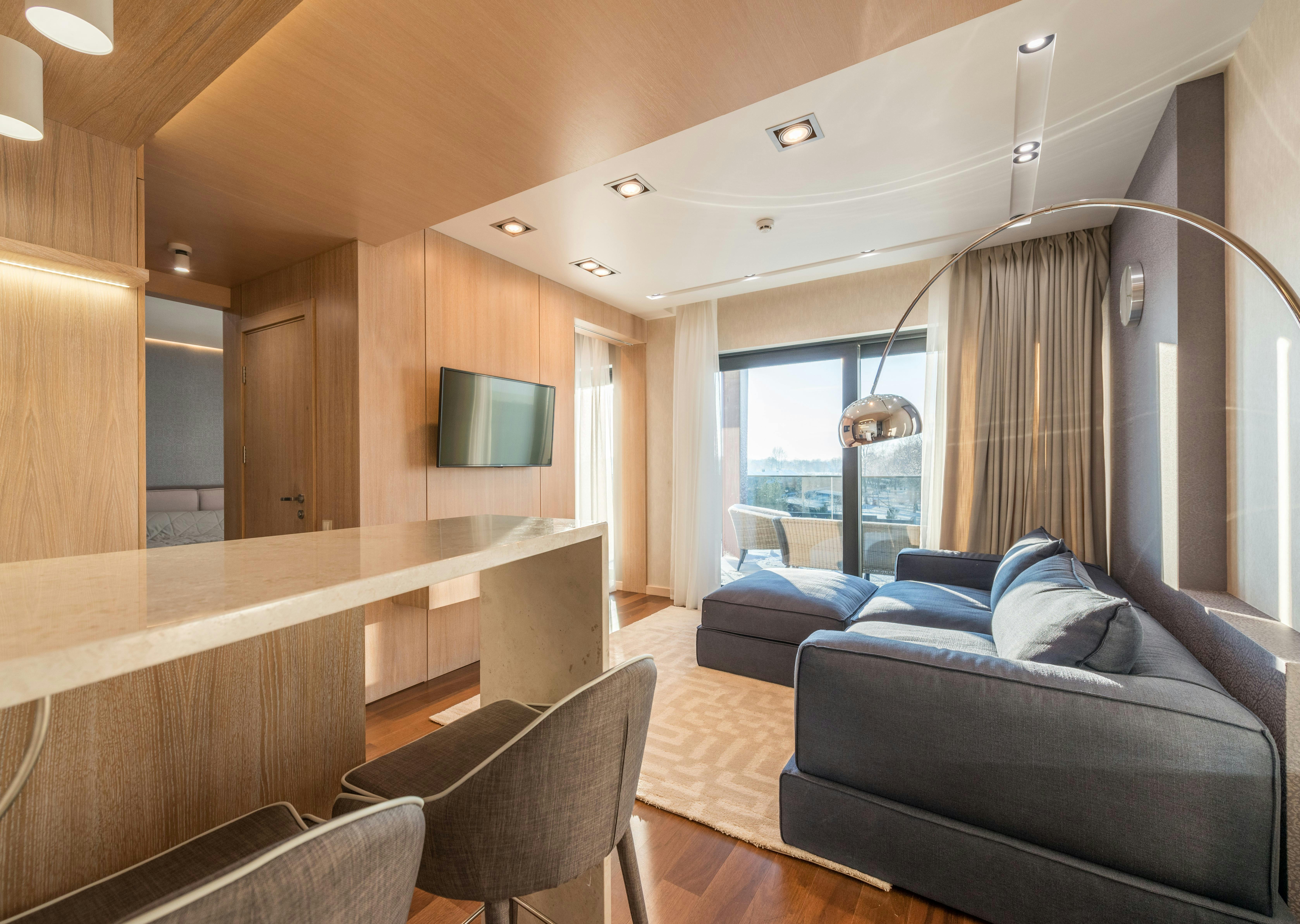
Apartment interiors in Dubai are usually more self-contained, which brings both restrictions and practical gains. A two-bedroom apartment of roughly 1,100 to 1,500 square feet is a typical brief across Downtown Dubai, Business Bay and JLT. Budget schemes are commonly estimated around AED 200,000 to AED 340,000, mid-range around AED 400,000 to AED 750,000, and high-end from AED 800,000 to AED 1.8 million-plus (market ranges). Timelines are typically the shortest in residential work, commonly around six to ten weeks for design and fit-out. Building management rules and shared services mean access and approvals must be coordinated carefully. Studios like Muse Design, VSHD Design, Zen Interiors and Sneha Divias Atelier are well suited to polished apartment work. Their skill in space planning and refined detailing pays off in compact, high-value interiors. Smart storage and clever zoning frequently deliver the largest visible gains in these apartments.
Villa interiors in Dubai
Villa interiors play out on a larger canvas, with more rooms, open-air space and structural freedom. Budgets span a wide range, from around AED 80,000 to AED 250,000 for simpler schemes to AED 250,000 to AED 600,000 at mid level. Luxury villas commonly run from AED 600,000 to AED 2 million-plus, while ultra-prime homes on Palm Jumeirah or Emirates Hills can reach AED 2.5 million to AED 6 million-plus (market https://www.topinteriordesigncompanyindubai.com/top-interior-design-firms/ estimates). Timelines grow accordingly, typically ten to fourteen weeks, and twenty to thirty-six weeks for large luxury builds. The extra scale rewards firms with turnkey design-and-build capacity and strong project management. Luxury Antonovich Design, CK Architecture Interiors and ALGEDRA Interior Design are firmly tied to high-end villa work. Muse Design and Zen Interiors also hold villa-heavy residential portfolios worth considering. Outdoor living, landscaping and pool areas often form part of the overall brief.
Beyond budget: scope, MEP and smart-home systems
Budget headlines obscure an important difference in scope between the two project types. Villas often involve far more mechanical, electrical and plumbing work, along with landscaping, pools and larger joinery packages. That greater complexity is one reason luxury villa timelines stretch to twenty to thirty-six weeks in 2026. Apartments condense value into fewer square feet, so finishes, storage and lighting carry more weight per room. Smart-home and smart-MEP integration, a defining 2026 trend, is easier to specify fully in a villa. Apartments can still be automated, though shared building systems put practical limits on what you can change. Sustainability and biophilic features, from eco-materials to planting, also differ between the two. Ask any studio how it handles these systems, since they shape both cost and programme.
Villa versus apartment at a glance
The table below lines up the two project types side by side on the factors that count most. It reflects 2026 market estimates and typical regulatory practice in Dubai. Treat the figures as planning ranges, because every property, community and specification is different. Use the best-fit firms row to tie your shortlist to studios with the right track record. Read it alongside the detailed sections above rather than on its own. The point is a quick, honest comparison to sharpen your own brief.
| Factor | Apartment | Villa |
|---|---|---|
| Typical size | ~1,100–1,500 sq ft (2-bed) | Substantially larger, multi-room |
| Typical spend | ~AED 200k–1.8M+ | ~AED 80k–6M+ (ultra-prime) |
| Programme | ~6–10 weeks | ~10–14 weeks (luxury 20–36) |
| Sign-offs | Building NOC + fit-out permit | Community NOC + fit-out permit |
| Best-suited firms | Muse Design, VSHD Design, Zen Interiors | Luxury Antonovich Design, CK Architecture Interiors, ALGEDRA Interior Design |
Which firms suit which project type
Matching the firm to the project type is where many clients find the most value. Apartment owners usually benefit from studios fluent in spatial planning and refined, material-led detailing. VSHD Design and Sneha Divias Atelier, for one, bring a considered, spatial sensibility to smaller footprints. Villa owners frequently need turnkey capacity to manage large, multi-trade programmes over many weeks. Luxury Antonovich Design and CK Architecture Interiors are set up for exactly that kind of end-to-end delivery. Some firms, such as Muse Design and Zen Interiors, readily handle both apartments and villas. Verify that any studio you shortlist has recent, comparable projects at your scale before signing up. A quick portfolio review typically shows whether a firm leans toward apartments or grand villas.
Lifestyle, resale value and time horizon
Beyond the figures, your lifestyle and time horizon should drive the decision. Owners intending to stay for many years can justify bolder investment in bespoke, long-lasting design. Those with an eye on resale may lean toward broadly appealing, quiet-luxury schemes that suit the next buyer. Villas give more scope to personalise, though that individuality can reduce the resale audience. Apartments in prime towers like Downtown Dubai often trade on location and finish quality. Family needs, entertaining habits and outdoor living each weigh differently between a villa and an apartment. Be honest about how you really live before fixing a brief with any studio.
How approvals and building rules differ
Approvals differ significantly between the two property types, and this surprises many owners. Apartment projects need a No Objection Certificate from the building’s management before a fit-out permit is issued. Villa projects typically need an NOC from the relevant community developer or master developer instead. In both cases permits are governed by Dubai Municipality, or by the Dubai Development Authority and Trakhees in certain zones. Dubai Civil Defence and DEWA sign-offs also apply wherever fire safety and utilities are affected. Apartments also carry practical constraints such as service-lift bookings, working hours and noise rules. Ask your studio to chart the exact approval path for your specific building or community. Missing an approval can derail a fit-out on day one, so this step is never optional.
Deciding in 2026
Deciding between the two comes down to matching scope, budget and studio to your property. Start by fixing a realistic budget band using the 2026 estimates set out above. Next, list the firms whose portfolios fit your property type and preferred style. Independent roundups can help you broaden the field, such as this Property Finder guide and this Betterhomes overview. Shortlist two or three studios and put the same scope and timeline questions to each. Weigh their answers against the table above to see who genuinely fits your project. Once property type, budget and firm are aligned, your project starts from a position of strength.
Making your final call
Ultimately, villa and apartment projects reward different strengths, so the firm must fit the format. For compact, high-value apartments, favour studios with sharp space planning and refined detailing. For expansive villas, prioritise turnkey delivery, project management and genuine experience at scale. Set your budget against the 2026 ranges above, then probe each shortlisted studio with identical questions. Cross-check their answers, portfolios and references before signing anything binding. The comparison table exists to keep the two options honest side by side. Choose with intent, and the finished home will reflect that early clarity.